 |
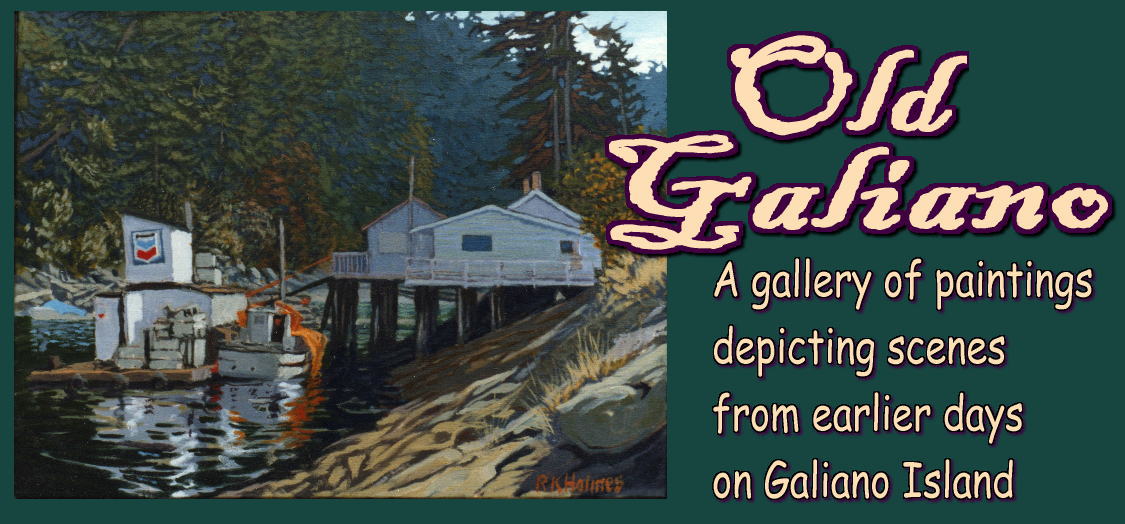 Porlier Pass Marina, circa 1979 Porlier Pass at the north end of Galiano Island was visited by a multitude of fishing vessels in earlier days as they passed between Georgia Strait and Trincomali Channel. Porlier Pass Marina sold them supplies and bought fish from them. Scroll Right >>>. |
|
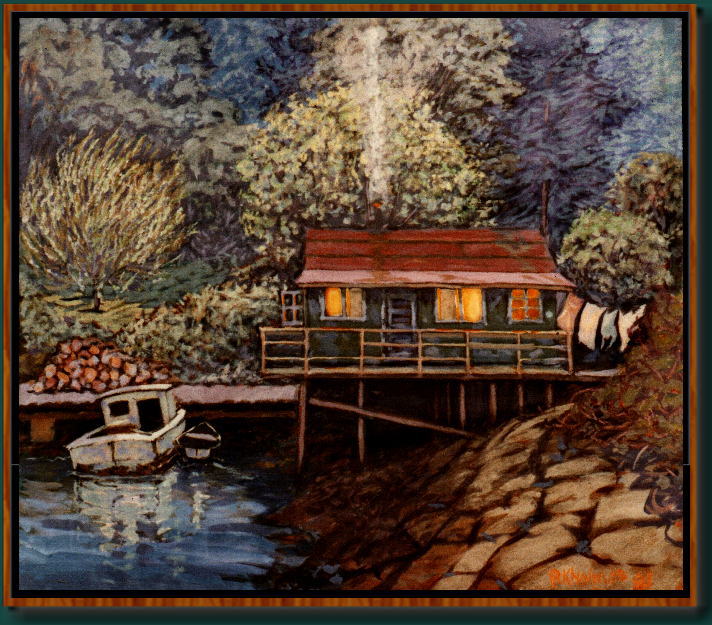 Fisherman's Cabin, Porlier Pass, circa 1978 At the end of the bay with the marina stood a fisherman's cabin, occupied seasonally. Cabins such as this one dotted these islands during the early days when fishing was carried on by hundreds of family operations. |
|
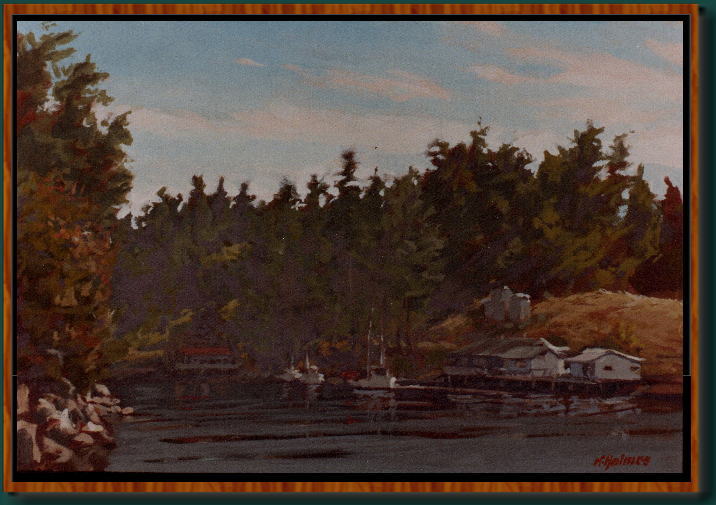 Porlier Pass Marina, circa 1985 |
|
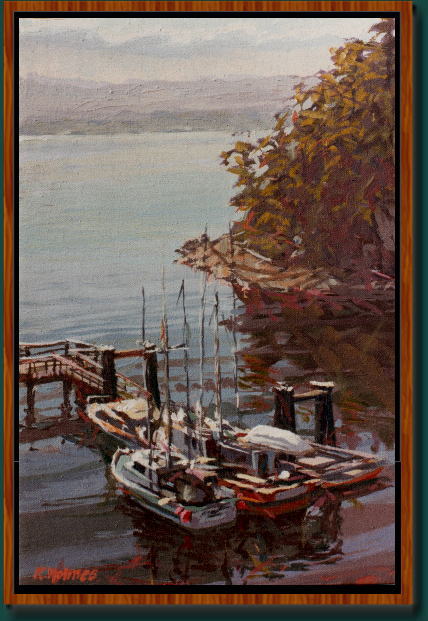 Fishing Boats Retreat Cove, circa 1990 Retreat Cove Wharf was another common layover port by itinerant fishermen. |
|
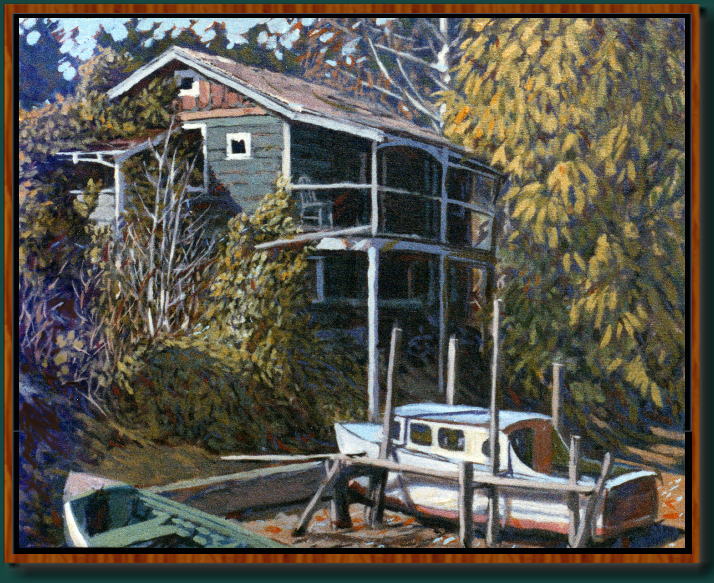 "Tomorrow's Dream" and the Old Mission House, Whaler Bay, circa 1979 In 1979 at the head of whaler Bay stood an abandoned building known as the Old Mission House. Natural growth appeared to be pulling the house back into the earth. In front of it was docked an apparently abandoned, fishing boat named "Tomorrow's Dream". |
|
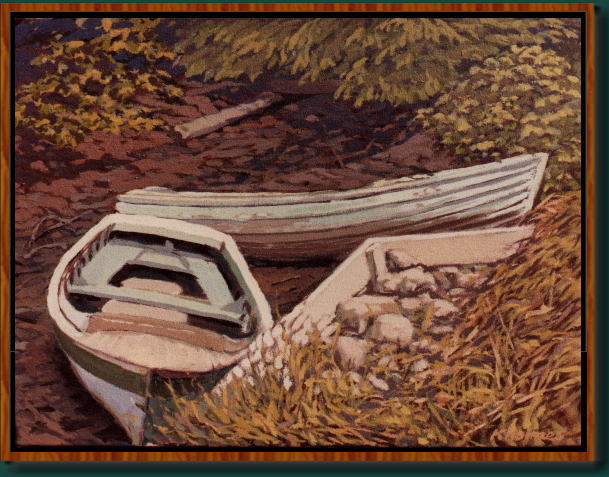 Two Clinkers, circa 1979 Pulled up alongside "Tomorrow's Dream" were two clinckerbuilt dories. Clinckerbuilt refers to the technique of building boats with shaped, overlapping planks. The origin of the technique goes back to the Vikings, well over 1000 years ago. |
|
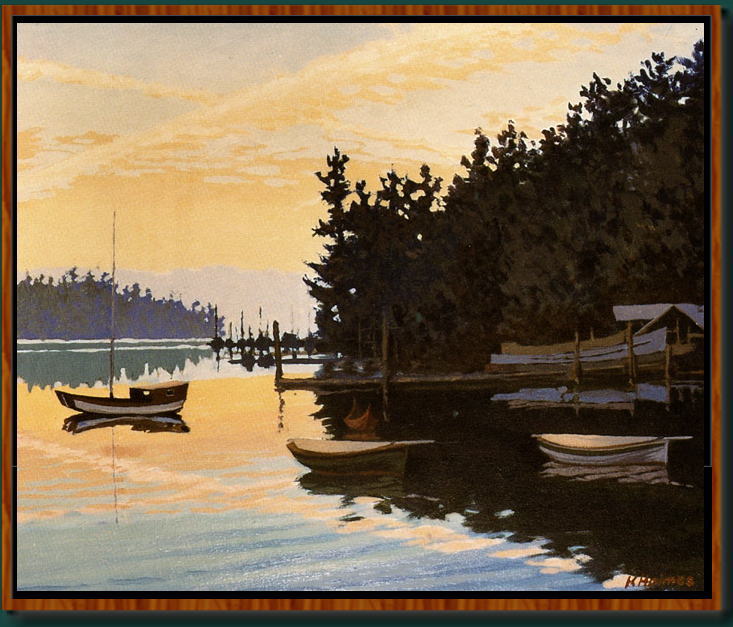 Galiano Boat Works, Whaler Bay, circa 1980 Near the head of Whaler Bay was Whaler Bay Boat Works where Master Builder Greg Foster hand- crafted wooden boats using classic designs and traditional methods. They were things of beauty drifting at anchor, reflecting in the still waters of the bay. |
|
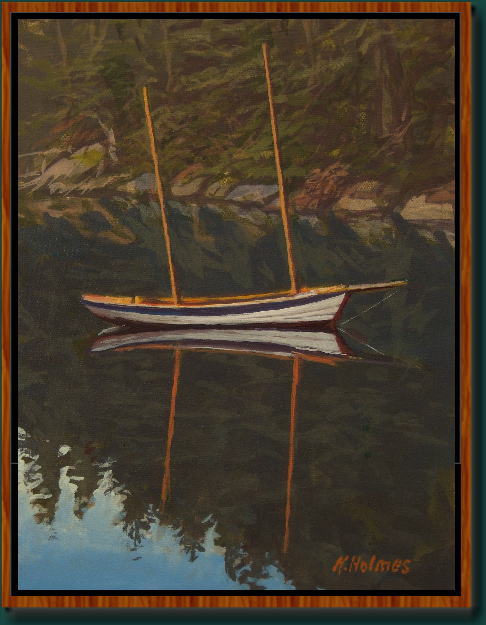 Greg's Boat 1, circa 1985 |
|
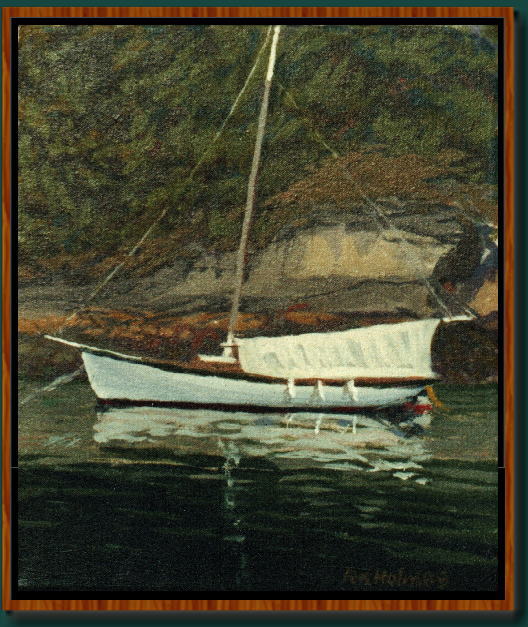 Greg's Boat 2, circa 1986 |
|
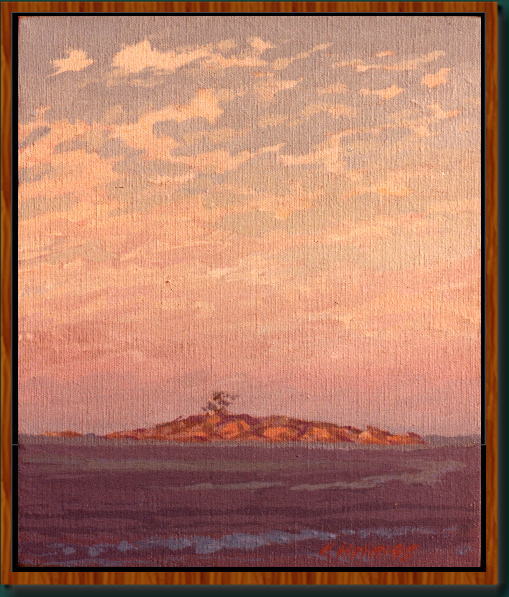 "Lone Tree Island", circa 1988 Lion Island, popularly known for many years as "Lone Tree Island" because of the dramatically wind-swept single tree that grew there. The island developed a mystique; people would go there to meditate. Eventually the island sold. The tree has now been replaced by a house. |
|
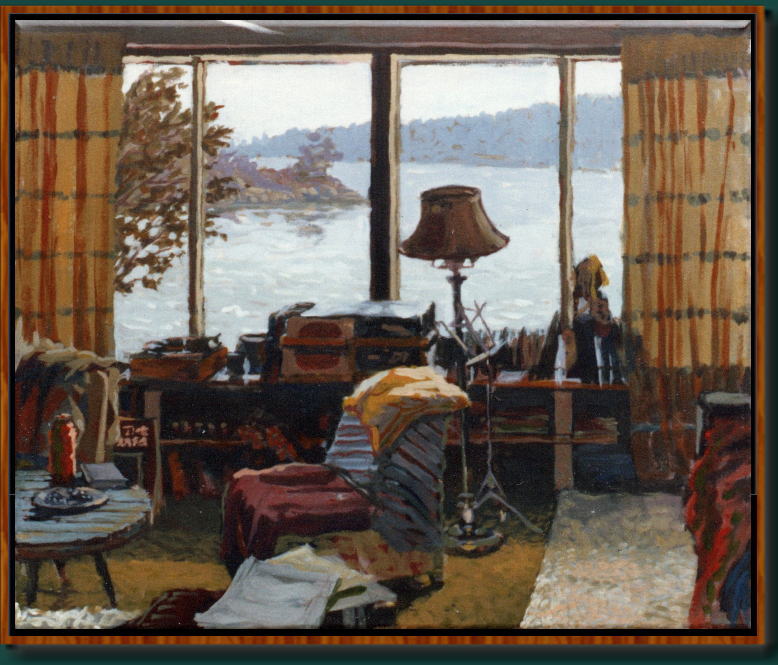 Activista, circa 1980 Our first rental on Galiano was a beachhouse on Active Pass appropriately named "Activista". It looked out on the pass and the very picturesque Arbutus Point with its tiny cabin and graceful arbutus tree. The Pass was alive with nautical traffic and wildlife. |
|
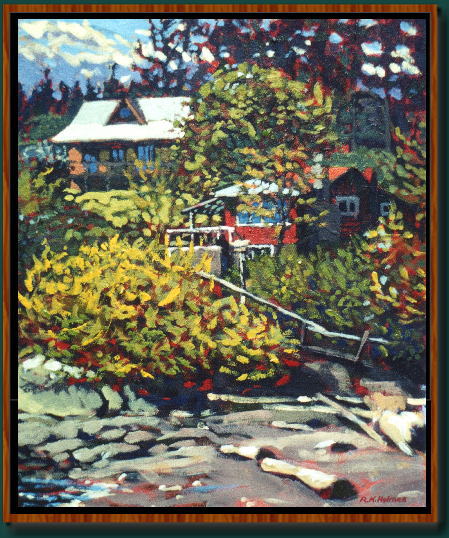 Activista and the old Baines House. circa 1978 Activista seen from the beach, painted shortly after we moved in, in the fall 1978. Up behind Activista is the old Baines house which burned to the ground the following winter, fanned by high winds off the strait. |
|
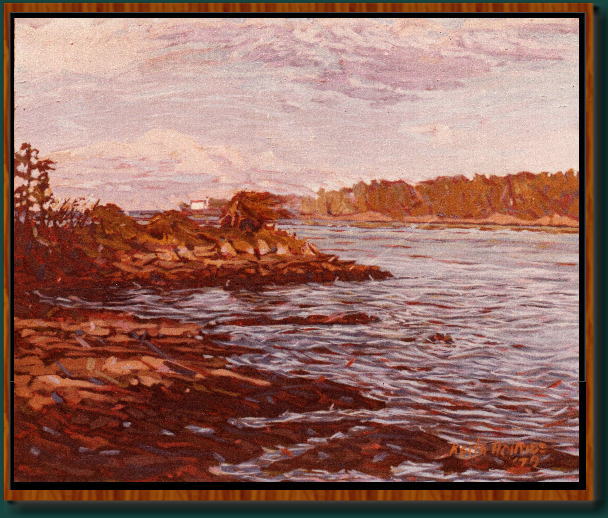 Arbutus Point from Activista, circa 1979 The changing moods of the picturesque Arbutus Point never ceased to inspire. I painted it many times from all angles. Here are a few... |
|
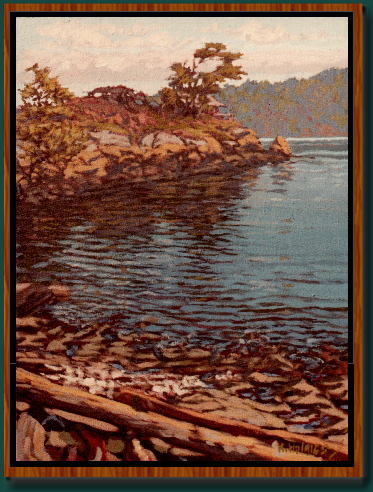 Arbutus Point Reflections, circa 1979 |
|
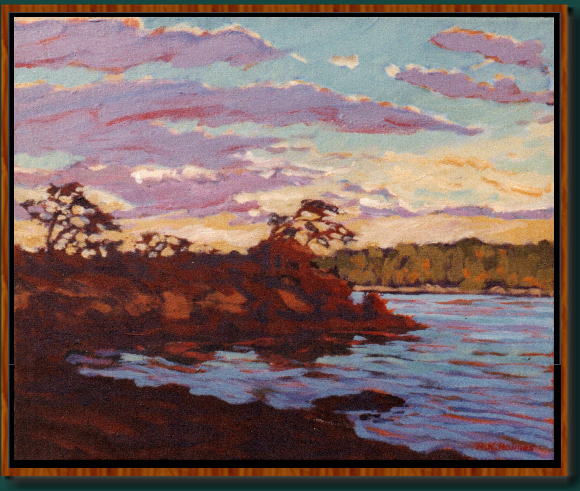 Arbutus Point Sunset, circa 1979 |
|
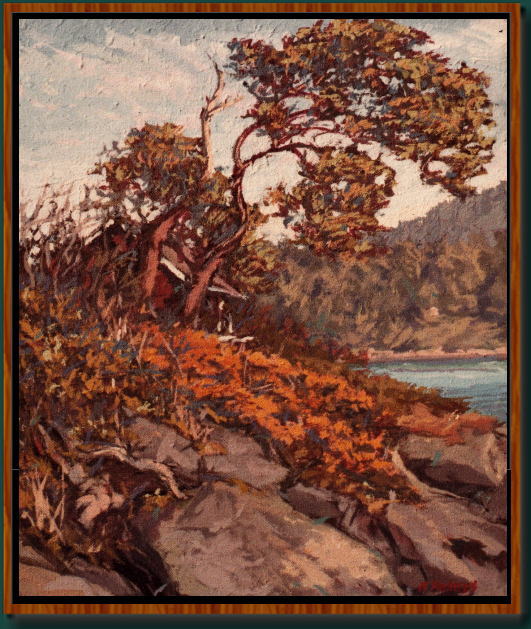 Arbutus Point, Flowering Gorse, circa 1979 |
|
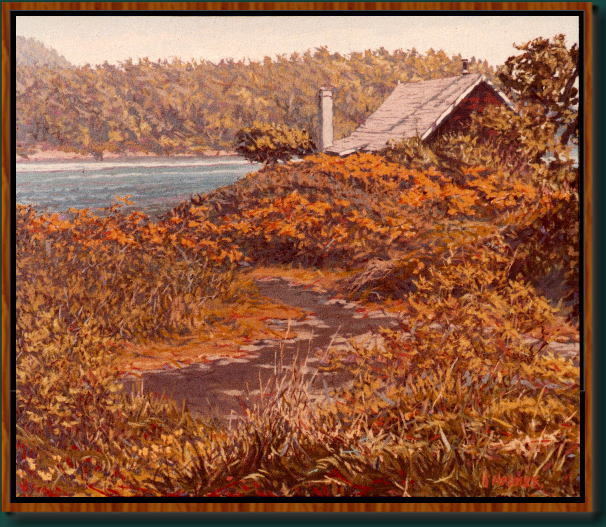 Path to Arbutus Point, circa 1979 |
|
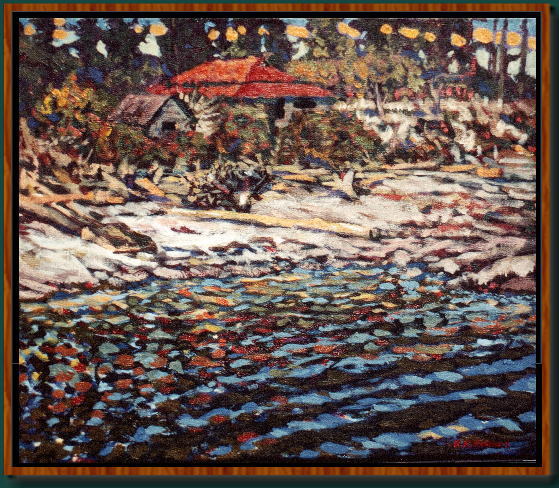 Primal Point, circa 1979 In the late 60s a few communes emerged on Galiano as part of a 'Back to the Land' movement. One took shape on an abandoned resort on Active Pass and was given the name "Primal Point" by its founders, in reference to a technique of emotional release by 'Primal Scream' therapy. Its other name was Rollicks. |
|
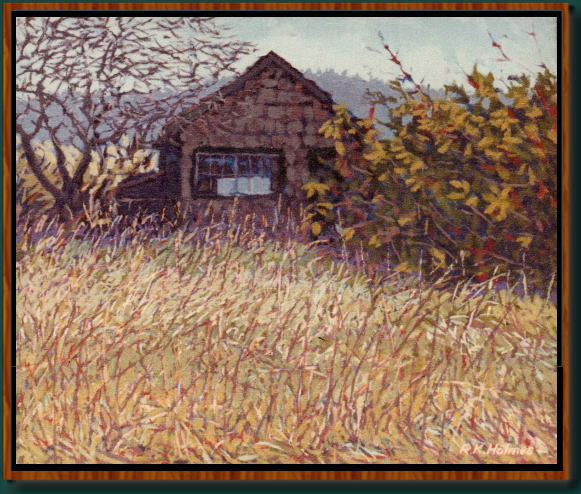 Primal Point Cabin, circa 1980 The commune restored and occupied the buildings of the old resort. There was a main house, pictured left, and a number of small cabins. When I painted here the commune too had been abandoned, but its ghosts lingered. |
|
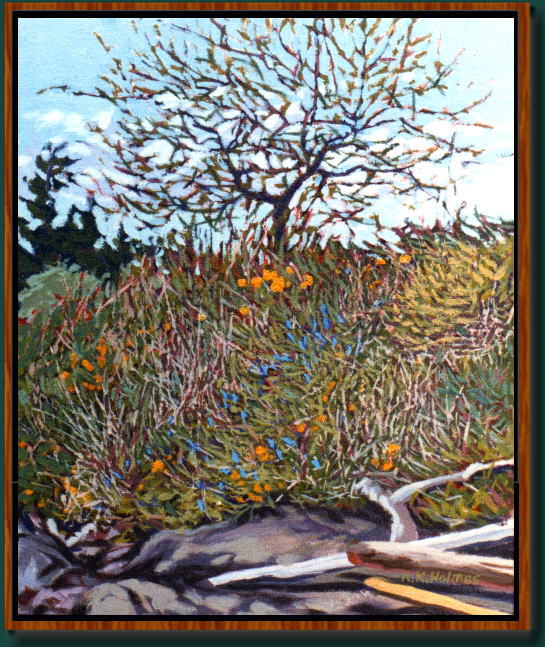 Primal Point apple tree, circa 1980 |
|
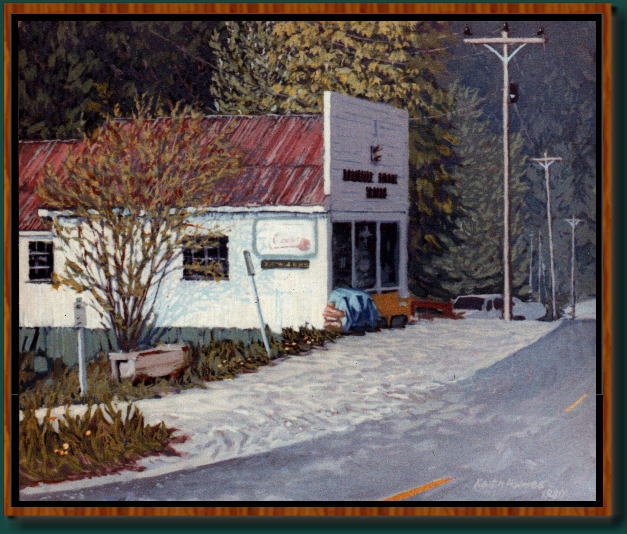 Burrill Bros Store, circa 1982 The old Burrill Bros. Store, having been moved from its original location at the corner of Burrill and Bluffs Roads to Sturdies Bay Road near the ferry terminal, was something of a community hub when we came to the island. Friday mornings it was a hive of activity, its back-corner coffee room full and buzzing with conversation. |
|
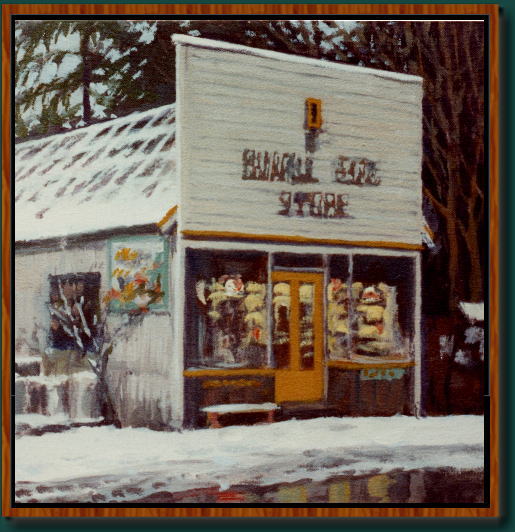 Burrill Bros, Snow, circa 1982
|
|
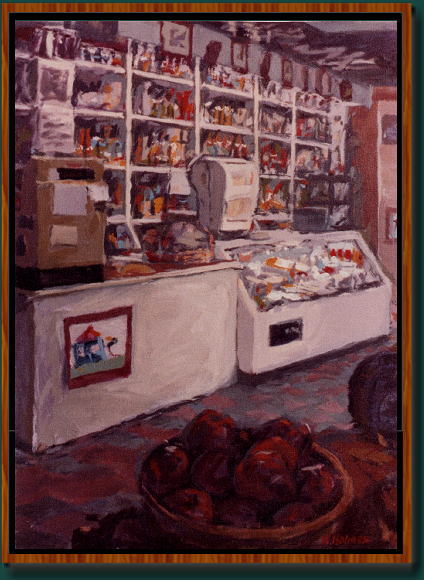 Burrill Bros Store by Night, circa 1982 The owners of the store, Bob And Carol George, allowed me in after hours to paint.The old style of retailing groceries took me back to early childhood. I found it a worthy subject. |
|
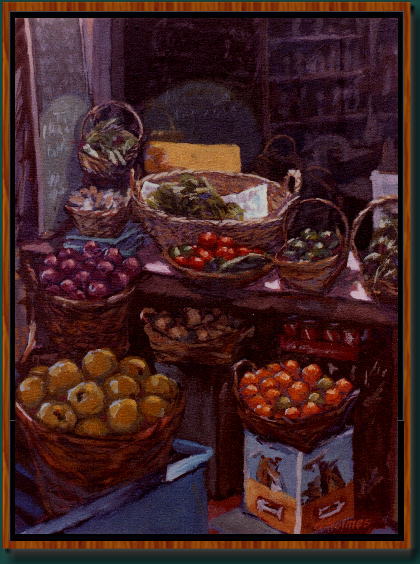 Burrill Bros, Night Produce, circa 1982 A great barrel wood stove would go out at night and, much of the year, produce could be left out in the cool night air. |
|
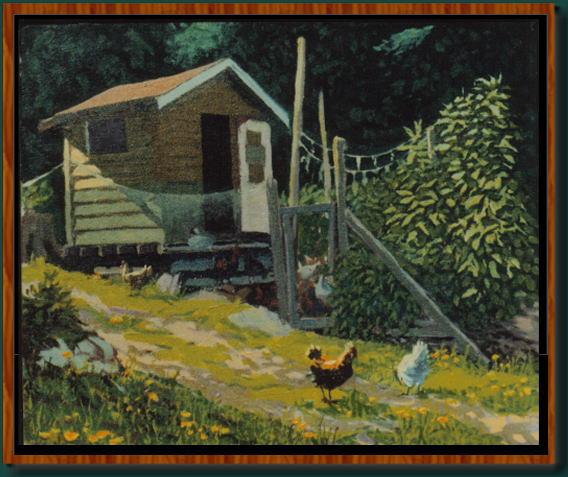 Dorothy's Chickens, circa 1982 Many islanders kept chickens. These were Dorothy Lupton's, an artist, who rented us our second home on Galiano. |
|
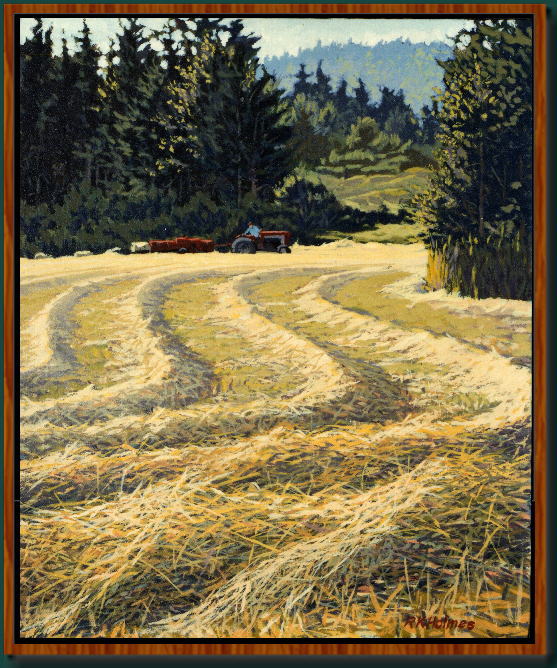 Haying, circa 1981 On a field beside Farmhouse Road, now gone wild, Oli Garner used to cut a good harvest of hay every year to feed his cattle. |
|
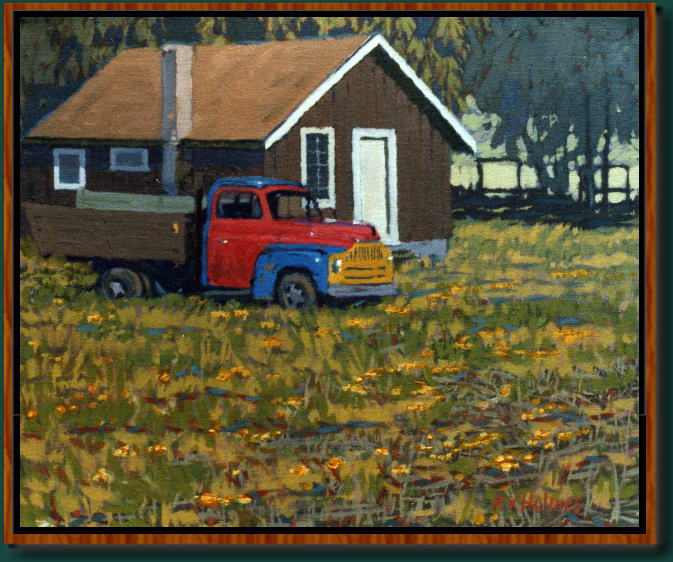 Shane's Truck, circa 1985 Shane Blackwood's colourful truck was a fixture of the island for a few years. When it ceased to run it added colour to Shane's meadow for a few more. |
|
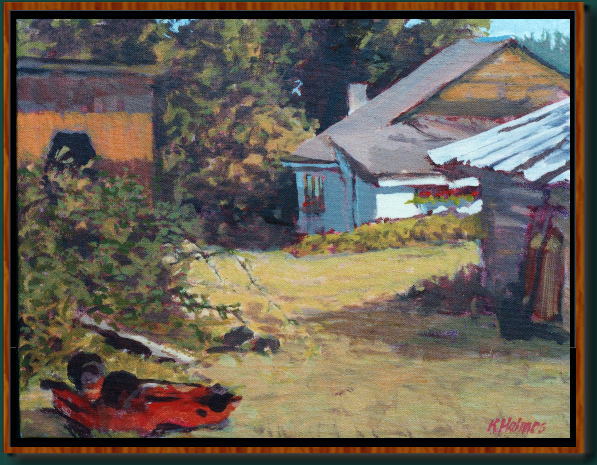 Sturdies Bay Cabin, circa 1985 |
|
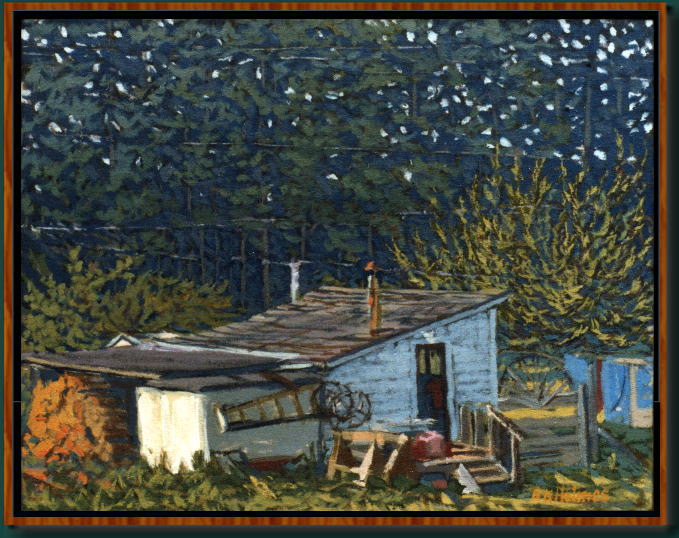 Woodshed, circa 1991 Woodshed and laundry room at the original "Penny's Cottages" on Bluff Road, now "Driftwood Village".. |
|
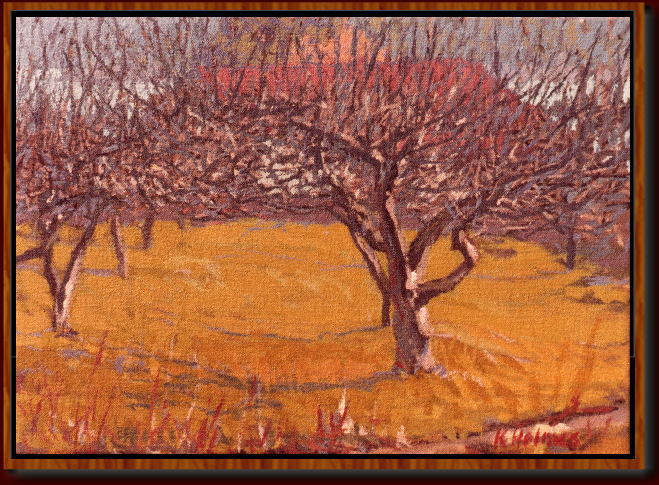 Sturdies Bay Orchard, circa 1985 A small orchard once occupied the land that is now the BC Ferries parking lot at Sturdies Bay. |
|
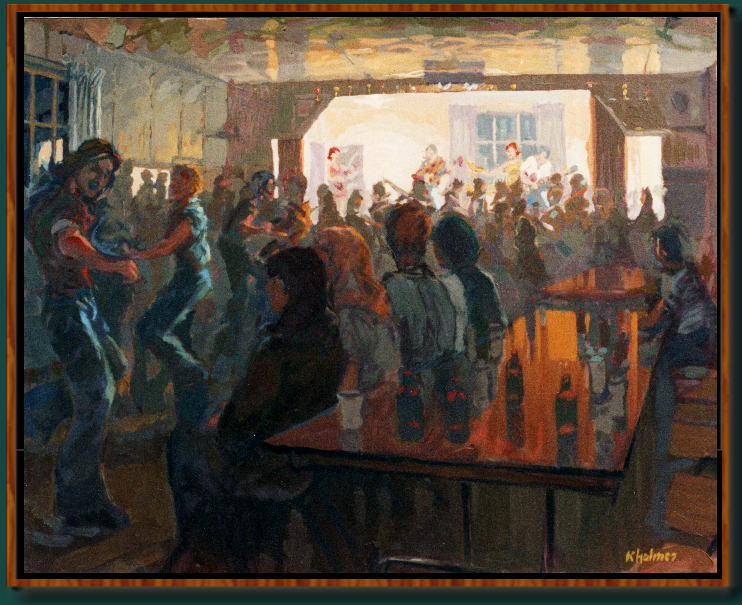 Dance at the Community Hall, circa 1982 The Galiano Community Hall has hosted dances since it was built 100 years ago. In the eighties and nineties it drew young islanders with many excellent live bands from Vancouver and sometimes Galiano. |
|
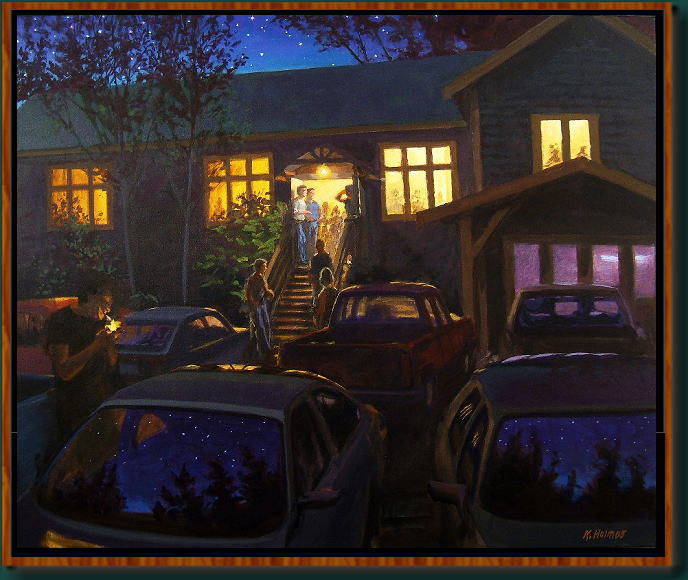
Dance at the Community Hall, Intermission, circa 1990 |
|
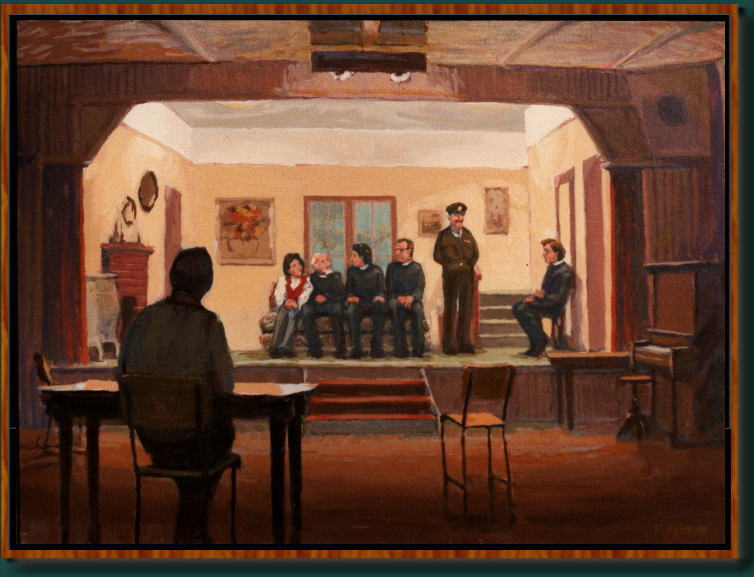 Rehearsal at the Community Hall, circa 1982 A golden age of theatre was introduced in the early eighties when Ken and Enid Gaylor produced a series of English farces. This pictures the dress rehearsal of "See How They Run", Ken Gaylor, foreground, directing actors Linda Laughlan, Ian Runciman Hooley, George Harris, Ken Partisan, Joe Flemming (also set designer and builder) and Steve Gaylor. |
|
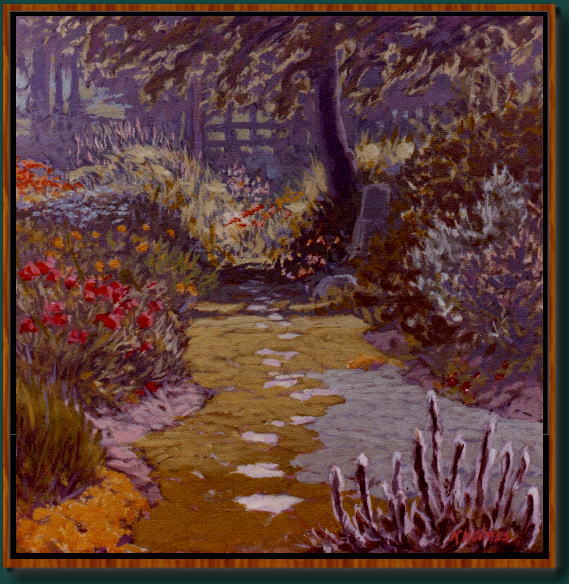 Annie's Garden, circa 1990 Annie Breddles, a master gardener, created an extraordinary garden as a labour of love on a property she was renting. Beautifully designed around existing trees and shrubs, the ground carpeted with a variety of mosses that released fragrance when walked on. It was a joy to experience. |
|
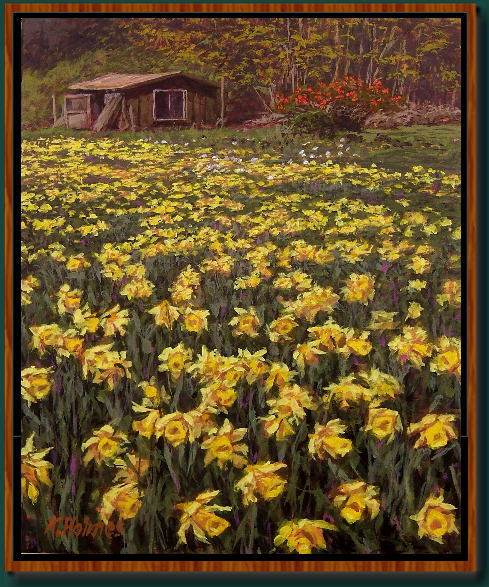 A Host of Golden Daffodils, circa 1990 Wandering by Rose Longini's field of daffodils cultivated over several years, perhaps within earshot of Rose playing piano or harpsichord, couldn't help but bring to mind Wordsworth's famous poem: "I wondered lonely as a cloud... And all at once I saw a crowd, A host of golden daffodils... " |
|
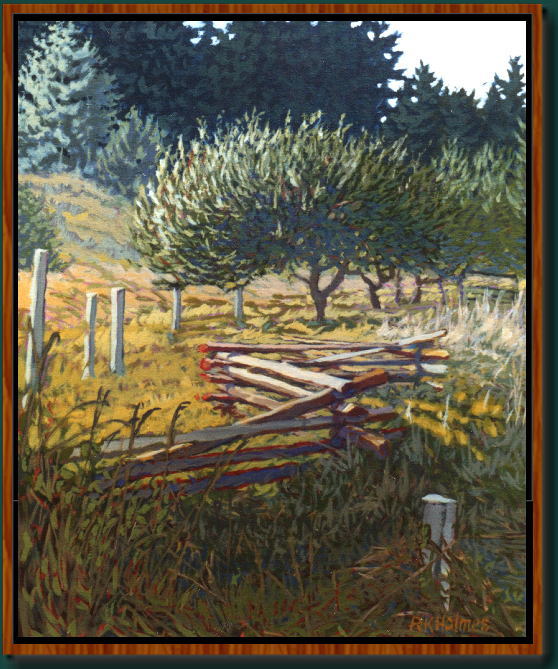 Snake Fence, circa 1990 |
|
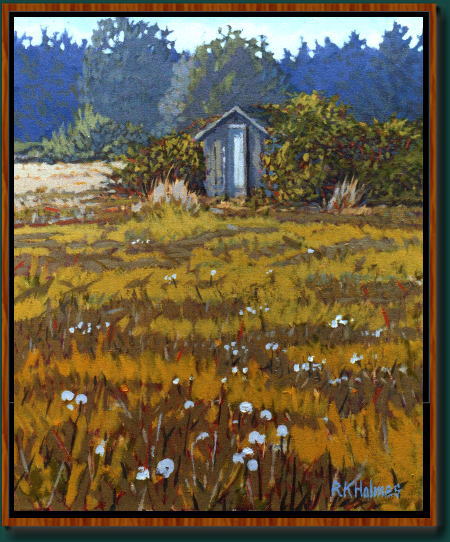 Old Pumphouse, circa 1990 |
|
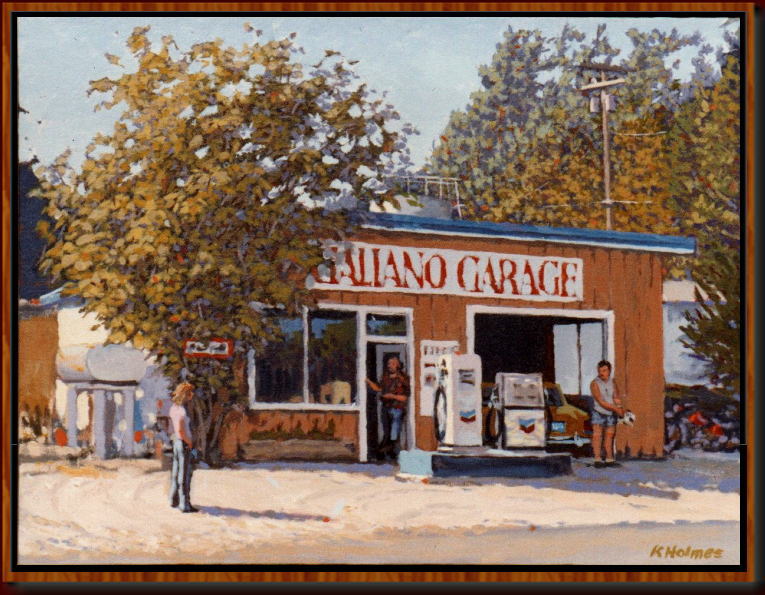 Galiano Garage, circa 1990 Nancy Quist, Mark Matthews and Chris Bird. |
|
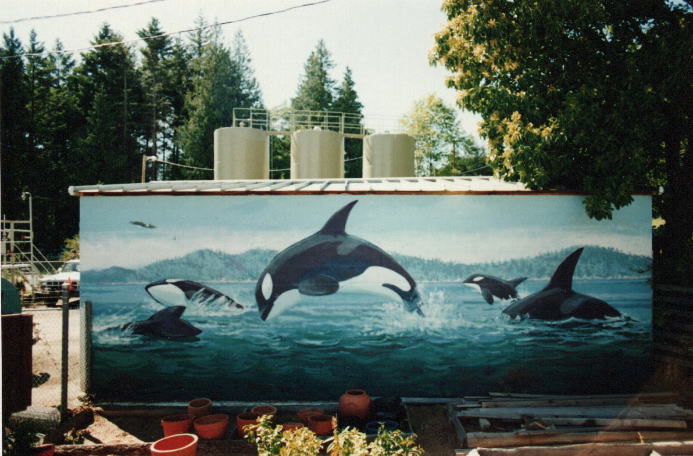 Orca Mural, Galiano Garage, circa 1995 My first venture into mural painting resulted in this Orca mural on a Galiano Garage out-building. Commissioned by Nancy Quist, then owner of the business, and working with friends, Stan Phelps and Ronaldo Norden, it was an adventure and led to many other mural projects culminating for me with a mural at the new Galiano Museum in 2020. |
|
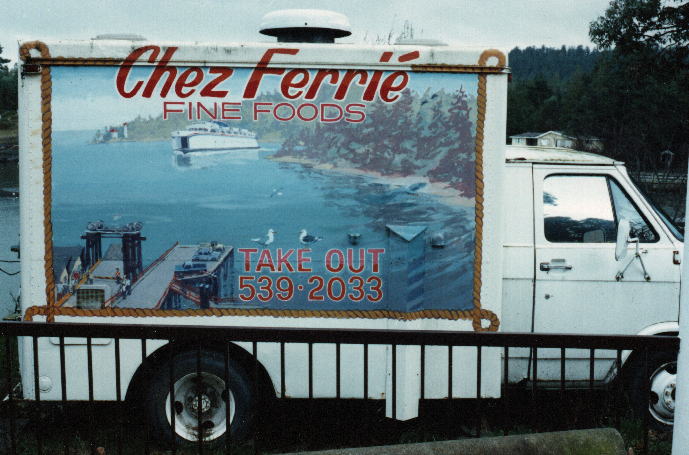 "Chez Ferrié", circa 1995 I painted another small mural on the first mobile concession to serve the new Sturdies Bay Ferry parking lot.. |
|
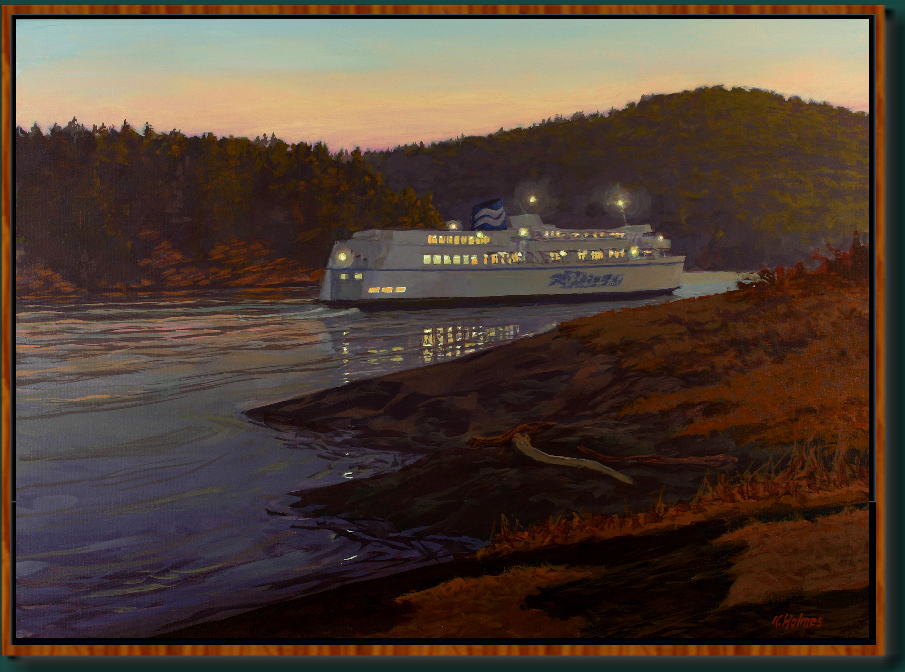 The Last Ferry, circa 2000 This painting depicts the last ferry of the day passing Bellhouse Park but also, as it turns out, the last of the Queen series of ferries, the "Queen of Nanaimo", to serve the Gulf Islands. The Queen of Nanaimo was decommissioned in 2017. |
Island Characters |
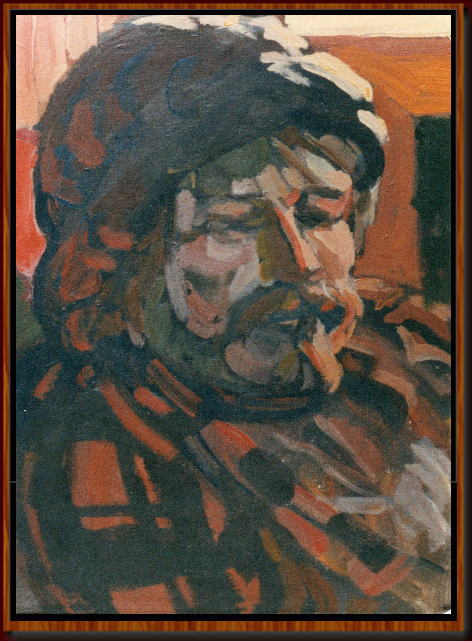 Shane Blackwood, circa 1979 Shane was often a morning coffee guest of ours during our first days on Galiano. Friendly and informative about the island, he was a one-man welcoming committee and good company. |
|
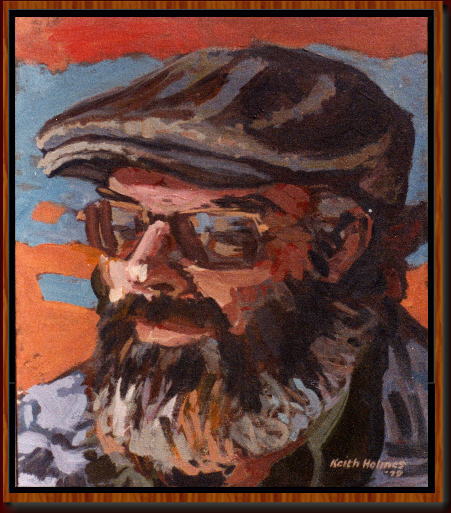 Bill Penny, circa 1979 Bill Penny was also and early acquaintance and friend of ours on the island. We found he had a very colorful background as ships engineer in the Arctic for Northern Transport then later, having built his own sailboat, sailed to the south pacific, and owned a copra plantation on an Island near Tahiti. During our first year here he founded "Penny's Cottages" which became a popular resort.. |
|
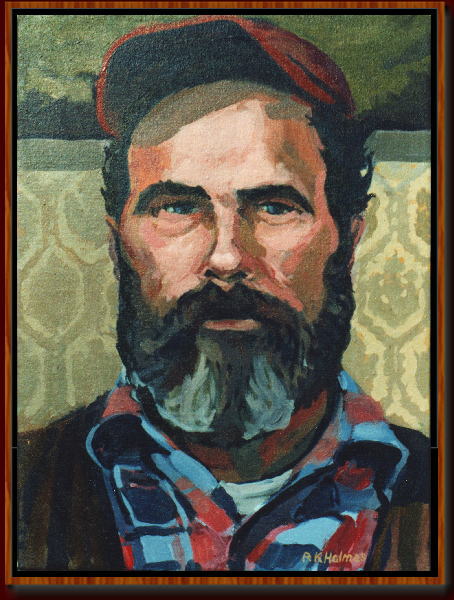 Bob George, circa 1982 Bob George was (and still is) also a colourful character. Proprietor of Burrill Bros. store, a sailor and a pilot who could often be seen flying his yellow Waco biplane over the island. |
|
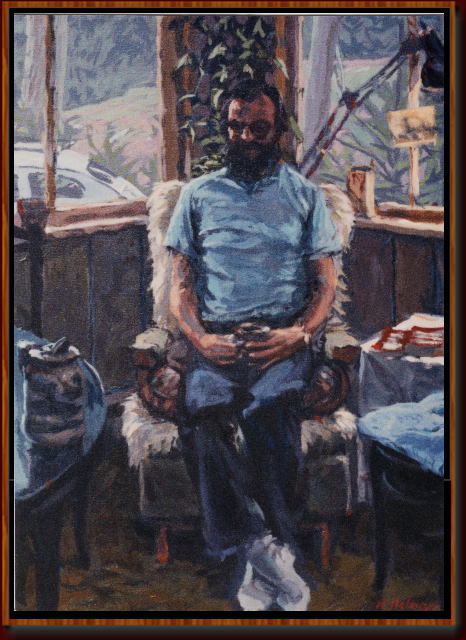 Vaughn Cowley, circa 1982 Vaughn Cowley poses for me in our little cabin. Vaughn was a fixture in Burrill Bros. coffee corner. He was a scientist who built technical devices for university research labs but a very friendly fellow who wanted to meet everyone and find our 'what they were about' over endless cups of tea. |
|
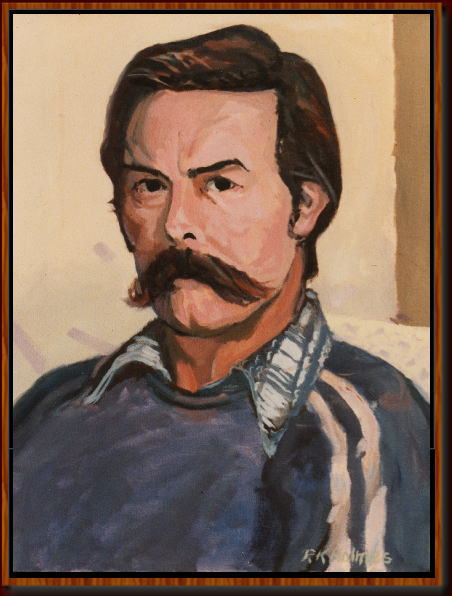 Pip Finnis, circa 1982 Pip Finnis was a descendent of the original Burrill Brothers who founded the store. He was many talented and had a unique sense of humour.. |
|
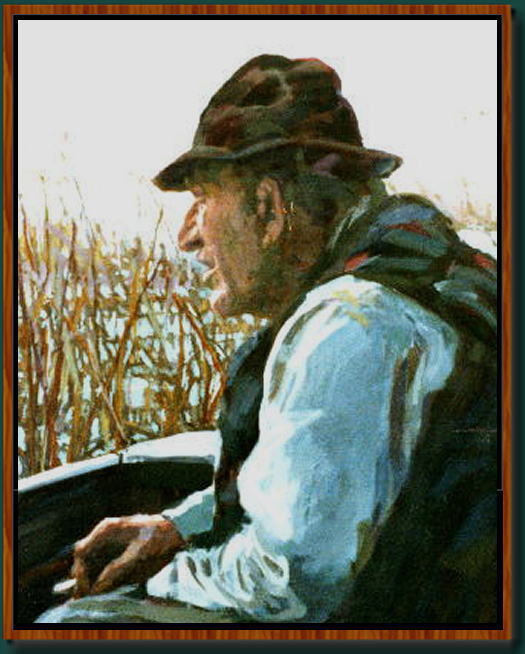 Bob Knowles, "Duck Hunting" circa 1982 Bob Knowles could often be found in Burrill Bros. coffee corner weaving tales of early days in logging camps. He was a multi-skilled builder with a worldly perspective and wide ranging philosophy. |
|
Return to MuralAct.com |
|